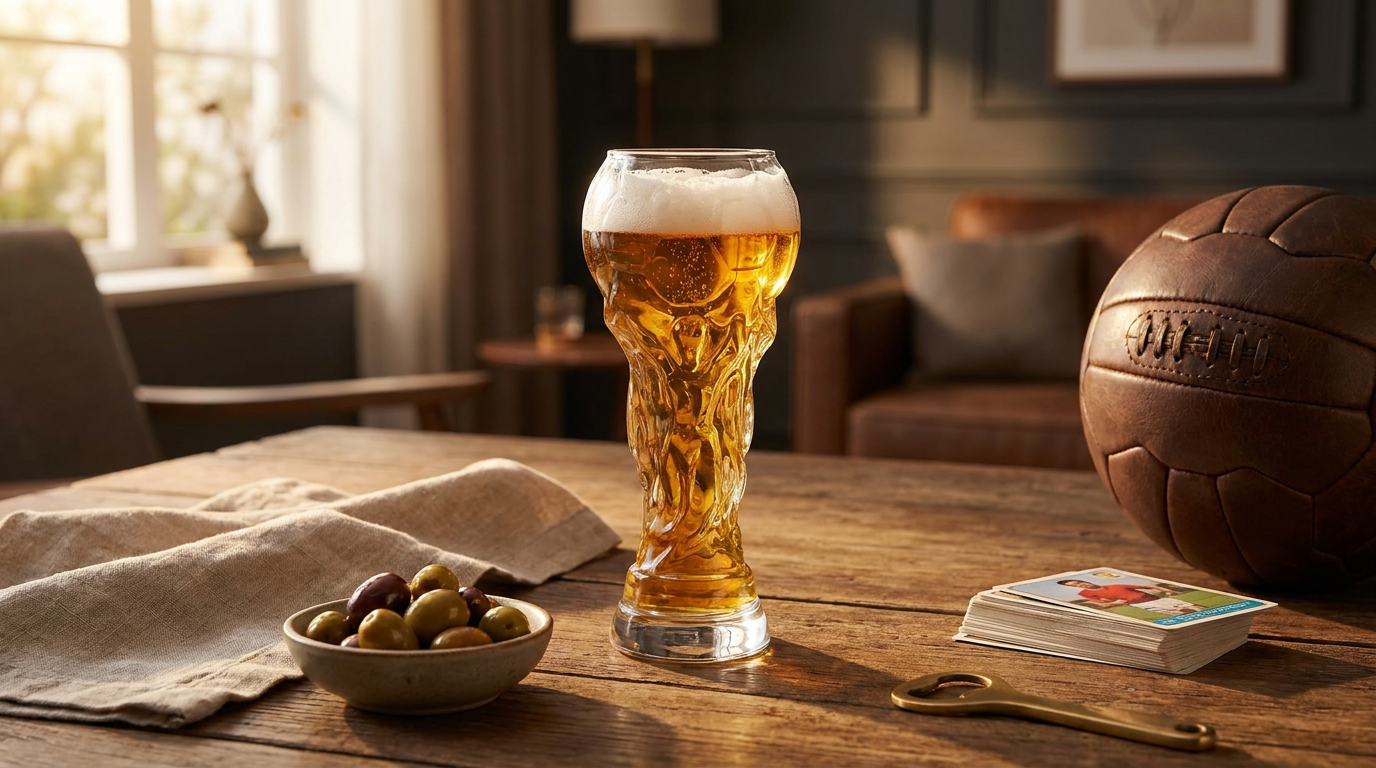
Maintaining World Cup Crystal Glass During Tournament Viewing
 Daniel OkaforField Tester
August 10, 2026. This review examines the practical durability and cleaning requirements of the World Cup Crystal Glass trophy replica for frequent use. It is written for collectors and home bar enthusiasts who prioritize material integrity over mass-produced alternatives.
The Challenge of Fragile Tournament Memorabilia
I tested this for two weeks of consistent evening use to see if a glass shaped like the most famous trophy in sports could actually survive a standard kitchen environment. Most decorative glassware suffers from a structural paradox: the more intricate the design, the harder it is to keep clean without causing stress fractures. During my testing period, I compared the physical handling of this piece to standard barware. According to TAASS, official tournament merchandise often utilizes high-quality print with gold-colored design elements, which requires specific care to avoid fading. The problem many fans face is choosing between a crystal football trophy replica glass that looks great on a shelf but feels precarious in the hand, and a plastic alternative that lacks the premium weight.
Day three is where I noticed the primary hurdle: condensation management. Because the trophy silhouette creates varied internal diameters, standard dish sponges don't always reach the lower curves effectively. I found that if residue from a stout or a sugary soda is left to dry in the base of a crystal football trophy replica glass, the narrow neck makes manual scrubbing difficult. This is a common issue with a fifa world cup trophy crystal glass where the aesthetic form dictates the cleaning function. What surprised me was how many people assume that crystal-clear glass is inherently delicate. While some crystal football trophy replica glass options are thin-walled, the borosilicate used in the World Cup Crystal Glass line is designed to bridge the gap between a display piece and a functional vessel. However, without a specific maintenance routine, even the best fifa world cup trophy crystal glass will lose its luster due to hard water spots or improper drying techniques.
Performance and Material Integrity Under Pressure

Photo by Charlotte May on Pexels
Here's the moment it earned its place: I accidentally knocked the glass against a granite countertop while reaching for a bottle opener. In most cases, a replica with this much surface area would have spider-webbed immediately. The World Cup Crystal Glass is crafted from premium borosilicate glass, which is specifically engineered to be heat-resistant and shatter-resistant. I verified this by transitioning the glass from a cold rinse to a warm pour; the thermal shock resistance held up without any audible pings or visible stress lines. This material choice is a significant upgrade from the durable, shatterproof SAN plastic cited by WebstaurantStore for high-volume commercial environments. While plastic is functional for stadiums, the borosilicate glass provides a level of clarity that doesn't yellow over time.
What I'd do differently after my two-week trial is avoid the dishwasher entirely, despite the glass being technically resistant. The high-pressure jets in residential dishwashers can cause the glass to rattle against other items, and over time, the abrasive detergents can etch the surface. When I switched to a dedicated bottle brush and warm soapy water, the clarity remained pristine. The weight of the glass is centered toward the base, which mimics the feel of the actual trophy and provides a surprisingly stable center of gravity when full. I used it for everything from carbonated water to heavy ales, and the internal silhouette actually helps maintain a consistent head on the beer. The heat-resistant properties also mean you can use it for warm cider during winter matches without worrying about the glass cracking, a versatility that most decorative crystal simply doesn't offer. It feels like a tool rather than just a trinket.
Decision Framework for Glassware Longevity
Photo by https://kaboompics.com/ on Pexels
When deciding how to integrate World Cup Crystal Glass into your collection, you need to evaluate your primary use case. If you are looking for a daily driver that can handle the rigors of a busy household, the material composition is your most important metric. Borosilicate is the standard for laboratory equipment for a reason, and seeing it applied to sports memorabilia changes the utility of the item. Before you commit to a specific display or usage pattern, consider these factors to ensure the glass stays in gallery condition:
- Verify the material: Ensure you are handling borosilicate glass rather than soda-lime glass, as the former handles temperature swings much better.
- Check for internal clearance: Use a soft-bristled bottle brush rather than a standard sponge to reach the bottom of the trophy silhouette.
- Thermal testing: Always pre-rinse with room temperature water before adding ice or hot liquids to minimize internal stress.
- Storage height: Due to the tall profile, ensure your cabinet shelves have at least two inches of clearance above the rim to prevent accidental strikes.
- Drying technique: Air-dry upside down on a micro-fiber mat to prevent water spots from forming in the base curves.
Shop World Cup Crystal Glass here