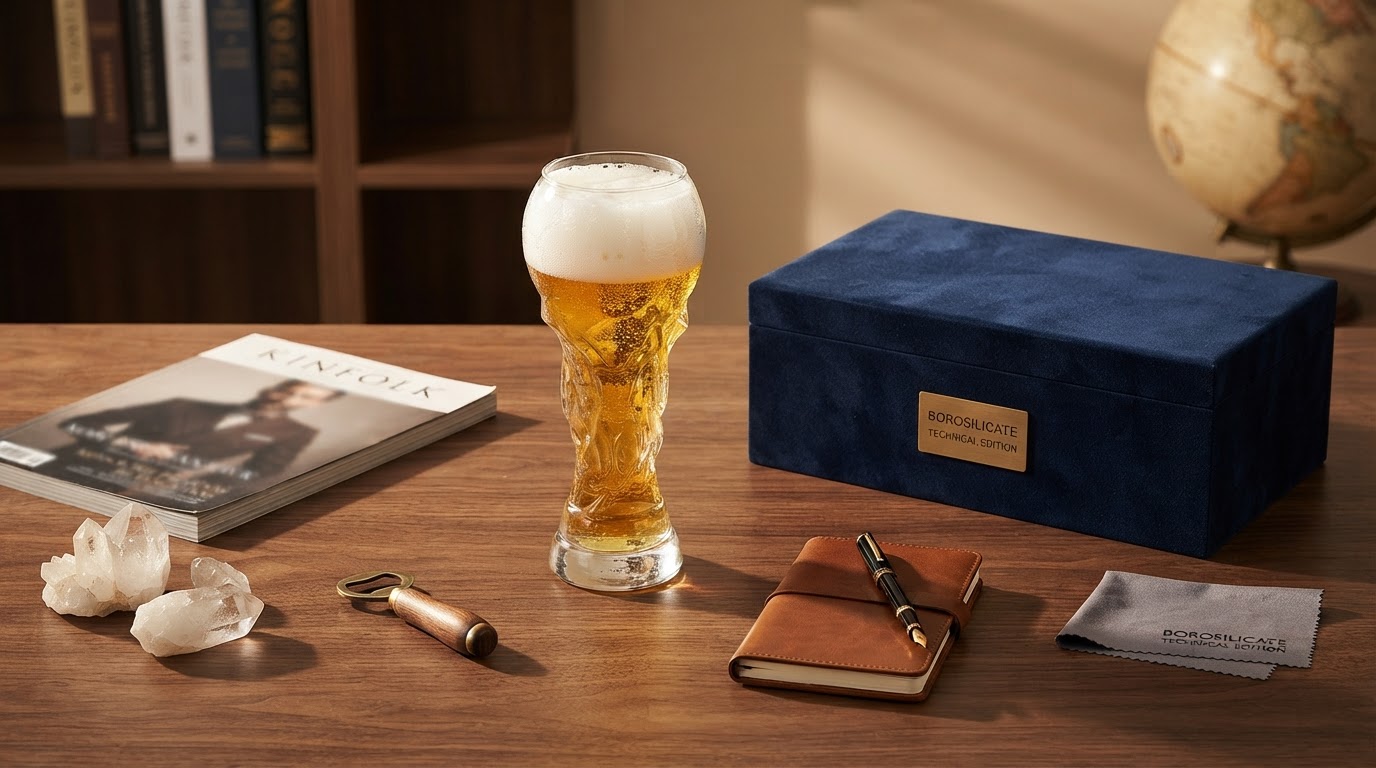
World Cup Crystal Glass and the Value of Borosilicate
 Maya ChenContributing Editor
October 16, 2026. This assessment examines the technical specifications and material durability of the World Cup Crystal Glass collection against standard market alternatives. It is intended for collectors who prioritize material integrity over mass-market novelty branding.
The conventional wisdom says that any vessel bearing a tournament logo is a worthy investment, but the secondary market for tournament memorabilia is littered with faded prints and chipped rims. Most consumers assume that "official" equates to "durable," yet standard soda-lime glass—the material used in the vast majority of promotional glassware—lacks the thermal shock resistance required for long-term utility. According to Atelier Sportif, official 2026 edition sippers are typically sold as 16oz sets with lids and straws, targeting a lifestyle aesthetic rather than high-performance longevity. While these serve a decorative purpose, the material science of standard glass remains inferior to borosilicate alternatives. In the context of a world cup trophy glass, the distinction between a souvenir and a precision-engineered vessel lies in the coefficient of thermal expansion. Most collectors ignore the fact that soda-lime glass expands significantly when exposed to heat, leading to stress fractures over repeated dishwasher cycles. Here's the part nobody talks about: the longevity of a collection is determined by the glass's ability to withstand these micro-stresses, not just the rarity of the logo printed on the surface. When evaluating a world cup final memorabilia glassware piece, the buyer is often paying for the license fee rather than the glass quality itself.
Photo by Marta Dzedyshko on Pexels
World Cup Crystal Glass addresses this structural deficit by utilizing premium borosilicate glass, a material characterized by its high concentration of boron trioxide. This specific composition makes the vessel significantly more resistant to thermal shock compared to standard consumer glassware. As noted on Instagram, this high-quality glass is engineered to be both heat-resistant and shatter-resistant, providing a level of clarity that does not cloud over time. Run the math: a standard glass that requires replacement every two years due to etching or chipping costs more in the long run than a single borosilicate vessel that maintains its optical transparency for decades. This is particularly relevant for the crystal soccer trophy wine glass, where the thinness of the stem usually presents a structural vulnerability. By using borosilicate, the manufacturer can maintain a delicate aesthetic without the fragility associated with traditional lead crystal. Furthermore, the design of the world cup trophy glass incorporates the iconic silhouette of the trophy while maintaining a center of gravity that prevents tipping—a common flaw in top-heavy souvenir designs. While products like the 2026 FIFA World Cup 11oz Trophy Beer Glass offer the official gold trophy design and engraved text, the material performance of World Cup Crystal Glass provides a functional edge for those who actually intend to use their glassware for beverages rather than keeping it behind a display case. The integration of a world cup final memorabilia glassware theme into a high-performance material ensures that the object retains its value both as a tool and a collectible.
Selecting a trophy-style vessel requires a framework that prioritizes mechanical properties over marketing fluff. Most buyers are distracted by gold leaf or holographic stickers, but the utility of the glass is found in the rim finish and the base weight. When looking at a crystal soccer trophy wine glass, the rim should be laser-cut rather than rolled to ensure a consistent flow and minimal drip. If the glass feels exceptionally light but claims to be durable, it is likely borosilicate; if it is heavy and thick-walled, it is likely cheap soda-lime designed to survive shipping rather than use.
- Verify the material composition is borosilicate to ensure thermal shock resistance.
- Inspect the clarity for a lack of blue or green tints, which indicate high iron content and lower purity.
- Check for a laser-cut rim to distinguish professional-grade glassware from mass-produced molds.
- Ensure the volume (e.g., 11oz or 16oz) aligns with the intended beverage type, such as craft lager or wine.
- Confirm the presence of a weighted base to counteract the height of the trophy silhouette.
Shop World Cup Crystal Glass here