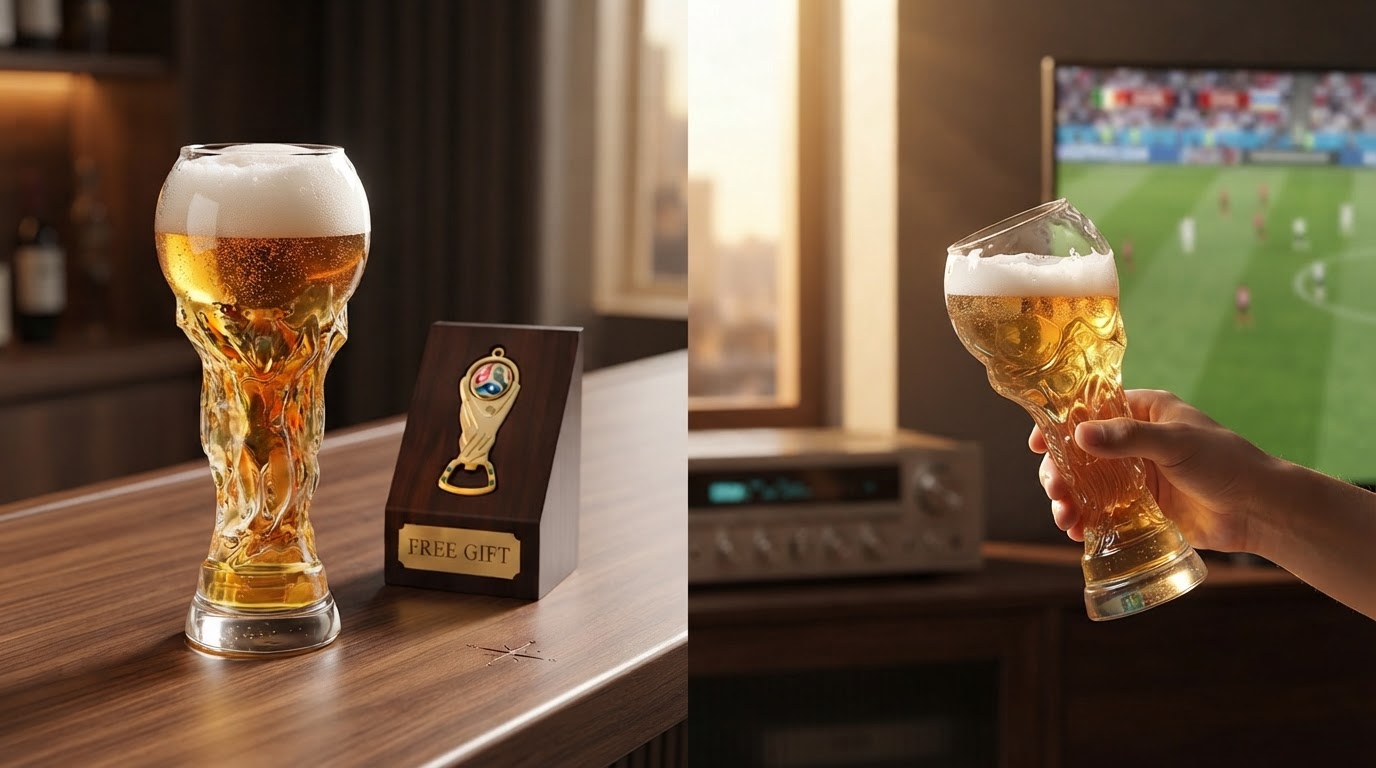
A 3-Point Framework for World Cup Crystal Glass
 Priya RamanSenior Analyst
October 10, 2026 — The rise of high-fidelity sports viewing has created a parallel demand for specialized drinkware, specifically the World Cup Crystal Glass, which bridges the gap between commemorative art and functional utility. As global fans prepare for the upcoming tournament cycle, the shift toward precision-engineered crystal reflects a broader movement in sports hospitality to prioritize the sensory experience of the match.
Selecting the right vessel requires moving beyond aesthetic appeal to evaluate technical performance. Wear Your Beer currently highlights the Guinness Special Edition Soccer Glass for the 2026 tournament, featuring a 20oz capacity and iconic toucan branding, which serves as a benchmark for traditional pint glass dimensions in this category. However, for those seeking a more specialized silhouette, the World Cup Crystal Glass offers a trophy-inspired geometry that fundamentally changes how the liquid interacts with the air and the palate.
The Three-Axis Performance Matrix
Think of it as a matrix of three distinct variables: volumetric capacity, thermal stability, and carbonation retention. These three axes matter here because they dictate whether a glass is a mere souvenir or a high-performance tool for beverage enjoyment. The first axis, volume, typically ranges from the 16oz sipper format to the more robust 500ml (approximately 17oz) or 20oz pint standards. The decision rule is simple: larger 20oz vessels are optimized for high-volume stouts and ales, while the 500ml World Cup Crystal Glass is specifically sculpted to mimic the FIFA trophy, providing a narrower base that tapers into a wider bowl.
This geometry directly impacts the second axis: carbonation. A common error in standard glassware is a pour that disrupts the bubble structure too early. World Cup Crystal Glass emphasizes a pour technique that preserves the head, as noted in recent technical demonstrations regarding carbonation management. The third axis is ergonomics. Unlike a standard cylindrical pint, the trophy-inspired design provides a natural grip point at the "stem" of the trophy, reducing heat transfer from the hand to the liquid. This ensures that the beverage remains at the optimal serving temperature through the duration of a 90-minute match. Once you see it this way, the choice between a standard commemorative glass and a specialized crystal vessel becomes a matter of balancing these technical specifications against your specific hosting needs, whether you are building a World Cup crystal drinkware set or selecting individual pieces of [commemorative World Cup barware](/blog/commemorative-world-cup-barware).
Expert tip: When using the 500ml World Cup Crystal Glass, tilt the glass at a 45-degree angle and aim the pour at the mid-point of the trophy’s curve to maximize the aromatic release without causing an over-expansion of the foam head.
Effective tournament preparation involves more than just selecting a single glass; it requires a cohesive strategy for selecting World Cup crystal glass for tournament hosting. By understanding the performance matrix, you can ensure that your world cup glass performs as well as it looks. The integration of high-clarity crystal with specific sports branding creates a durable, functional piece of history that elevates the standard viewing experience.
Sources
Photo by Charlotte May on Pexels
- World Cup glass, perfect to watch the football with this summer ...
- Guinness Special Edition Soccer Glass - World Cup 2026 Pint Glass
- This pint glass from the World Cup… - Instagram