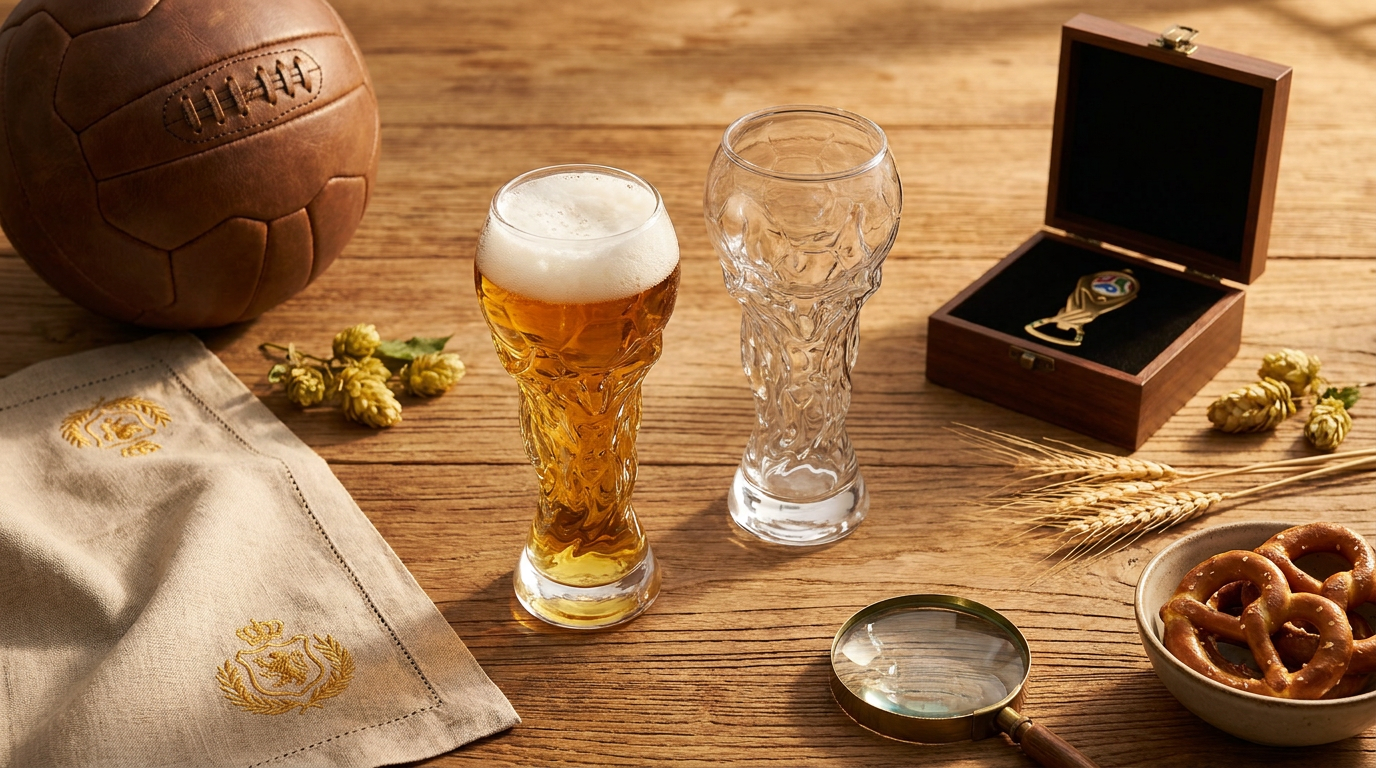
Forget the Logo: The Data on World Cup Beer Glasses
 Maya ChenContributing Editor
The conventional wisdom says that to properly commemorate the tournament, you need an officially licensed FIFA World Cup beer glass. This perspective prioritizes branding as the primary measure of value, driving fans toward mass-produced memorabilia that often compromises the actual drinking experience. The data, however, points to a different conclusion: the material science of the vessel is a far better indicator of quality than the logo etched onto its side. When the objective is to preserve the taste and temperature of a beverage for a full 90-minute match, the focus must shift from branding to performance.
Here's the part nobody talks about: the term “officially licensed” is a marketing tool, not a quality standard. These products are typically designed for high-volume commercial environments, not for optimal sensory experience. As noted by hospitality suppliers like ACityDiscount, officially branded pilsners and mugs are sold for bars and restaurants where durability and low cost trump thermal performance and clarity. Many are made from thick-walled soda-lime glass or even plastic, materials with poor thermal mass that allow a cold beverage to warm quickly. A focus on function over novelty reveals that a superior vessel is defined by its engineering—thin, laser-cut rims for a better mouthfeel and high-density crystal for temperature stability—not by its official affiliation.
Furthermore, the argument that these glasses are sound collectibles is questionable. Mass production inherently limits long-term appreciation in value. True collector's items are typically defined by craftsmanship, material quality, and scarcity. An officially branded glass produced by the hundreds of thousands fails to meet these criteria. This forms the central pillar of the case against the official FIFA World Cup beer glass; it occupies a space between a disposable cup and a genuine collectible, satisfying the requirements of neither. Proper collector glassware care is also a factor, as the printed logos on many official glasses are prone to fading in a dishwasher, diminishing their already tenuous value.
I'll change my mind when an officially licensed FIFA World Cup beer glass is produced from lead-free crystal with a measured wall thickness designed for thermal stability and a fire-polished rim—not just as a branding vehicle. Until then, the evidence suggests that discerning fans should prioritize material and design over logos.
Is an official FIFA beer glass a good investment?
As a financial investment, an officially licensed, mass-produced beer glass is unlikely to appreciate in value. Its primary worth is sentimental. Collectibles that see significant value increase are typically characterized by rarity and superior craftsmanship, two attributes not commonly associated with high-volume promotional merchandise.
Why does glass material matter more than the logo?
Photo by Engin Akyurt on Pexels
The material of the glass directly impacts the drinking experience. Non-porous crystal, unlike plastic or lower-grade glass, does not retain flavors or aromas from previous drinks. Its higher density provides superior insulation, keeping beer colder for longer. Finally, the structural properties of crystal allow for a finer, thinner rim, which enhances the perception of taste and texture on the palate.