The Unstable Reality of Replica World Cup Trophy Glass
 Maya ChenContributing Editor
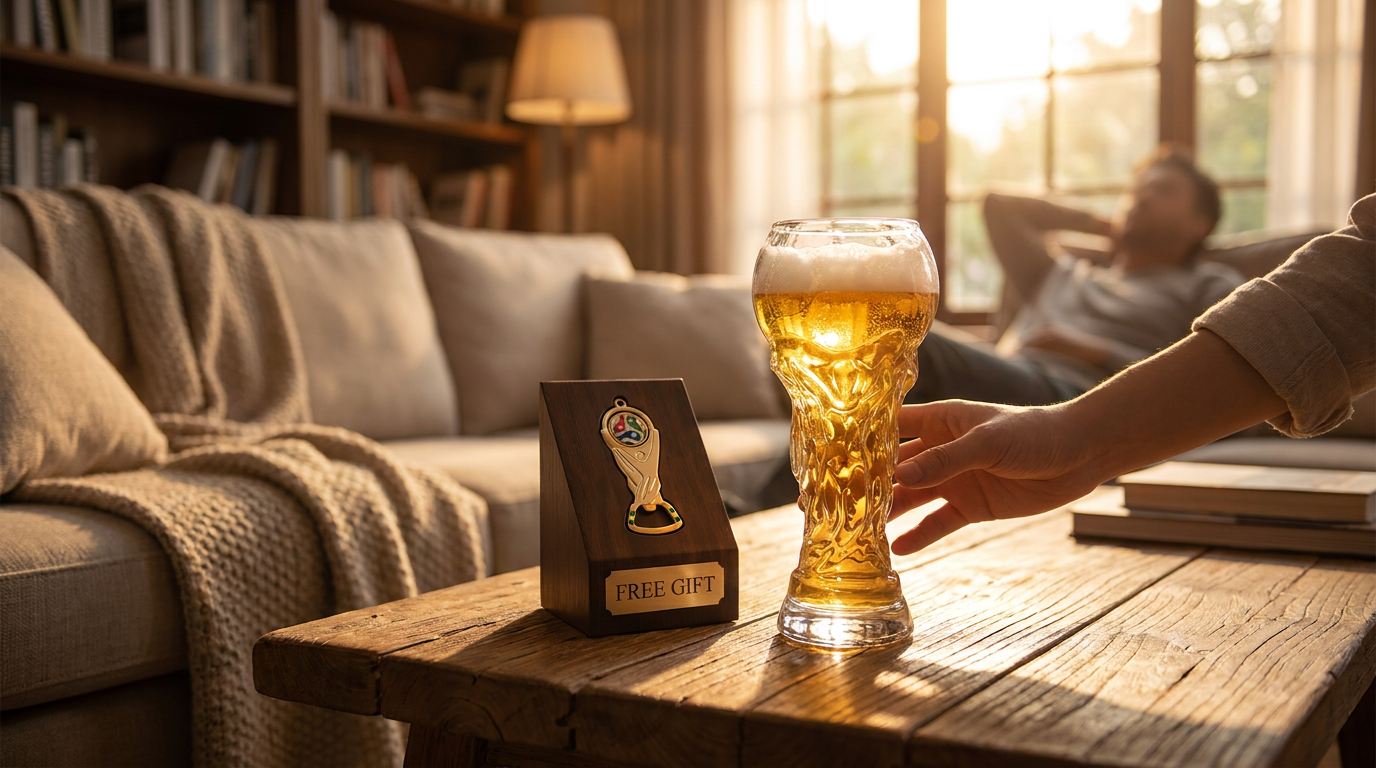
The conventional wisdom says a replica World Cup trophy cup glass enhances the match-day experience, bringing stadium prestige into your living room. The reality, however, is that the trophy’s iconic design is fundamentally at odds with the principles of a functional drinking vessel. The aesthetic accuracy that sellers promote comes at a direct cost to stability, ergonomics, and material integrity. Before investing in one, it’s critical to understand the inherent compromises involved.
Here's the part nobody talks about: the material disconnect. The actual FIFA World Cup trophy stands 36.8cm tall and weighs 6.175 kilograms, composed of 18-carat gold with a malachite base, as detailed by FIFA itself. A drinking glass made from crystal or borosilicate simply cannot replicate this density. To achieve the look, manufacturers use thin, molded glass, resulting in a lightweight object that feels nothing like the solid original. This discrepancy is the core of the functional myth of the World Cup trophy glass; consumers are sold an image of prestige that the physical product cannot deliver. The choice is between a non-functional, heavy resin sculpture or a feather-light, drinkable glass facsimile.
Beyond materials, the design's ergonomics are its primary failure point. Run the math: a typical replica glass stands between 200mm and 250mm tall to accommodate a 450ml beverage. When filled, the liquid mass raises the center of gravity significantly, making the tall, narrow structure notoriously top-heavy and prone to tipping. This contrasts sharply with standard pint glasses, which utilize a wide, heavy base for stability. The pursuit of an authentic silhouette directly creates an unstable vessel. This trade-off between form and function is a central theme in any honest collector's guide to the replica World Cup trophy cup glass, as the most visually accurate models are often the least practical for actual use. Even if it remains upright, the awkward shape is not designed for comfortable drinking.
Is a replica World Cup trophy glass good for drinking beer?
From a functional standpoint, it is a poor choice for beer. Its primary flaw is a high center of gravity, which creates instability, especially when filled. An enthusiastic goal celebration could easily lead to a spill. Furthermore, the wide-open top, designed to mimic the trophy's bowl, allows the beer's aroma and carbonation to dissipate quickly. This is the opposite of specialized glassware, like tulip or snifter glasses, which are shaped to concentrate aromatics and enhance the sensory experience. The trophy glass is a novelty item, not performance drinkware.
Why do most replica trophy glasses feel so light?
Photo by Eugenio Manalo on Pexels
Replica glasses feel light because they are made of glass or crystal, materials with a density far lower than the 18-carat gold of the actual trophy. Glass has a density of about 2.5 g/cm³, whereas gold is 19.3 g/cm³. To create a 6.175 kg drinking glass would require an impractically thick, heavy, and expensive vessel that would be impossible to drink from. Manufacturers prioritize the iconic shape over authentic weight, resulting in a product that is visually similar but tactilely completely different. Proper crystal trophy care is still important, but the item itself is a compromise by design.
I'll change my mind when a manufacturer produces a replica that incorporates a low, weighted base or gyroscopic stabilizer to counteract its inherent top-heaviness without sacrificing the silhouette.