Selecting World Cup Crystal Glass for Home Viewing
July 20, 2026. This assessment explores the practical considerations of selecting high-quality commemorative vessels for the upcoming international tournament. It is intended for collectors and supporters who prioritize material longevity over disposable novelty items.
The Landscape of Tournament Memorabilia
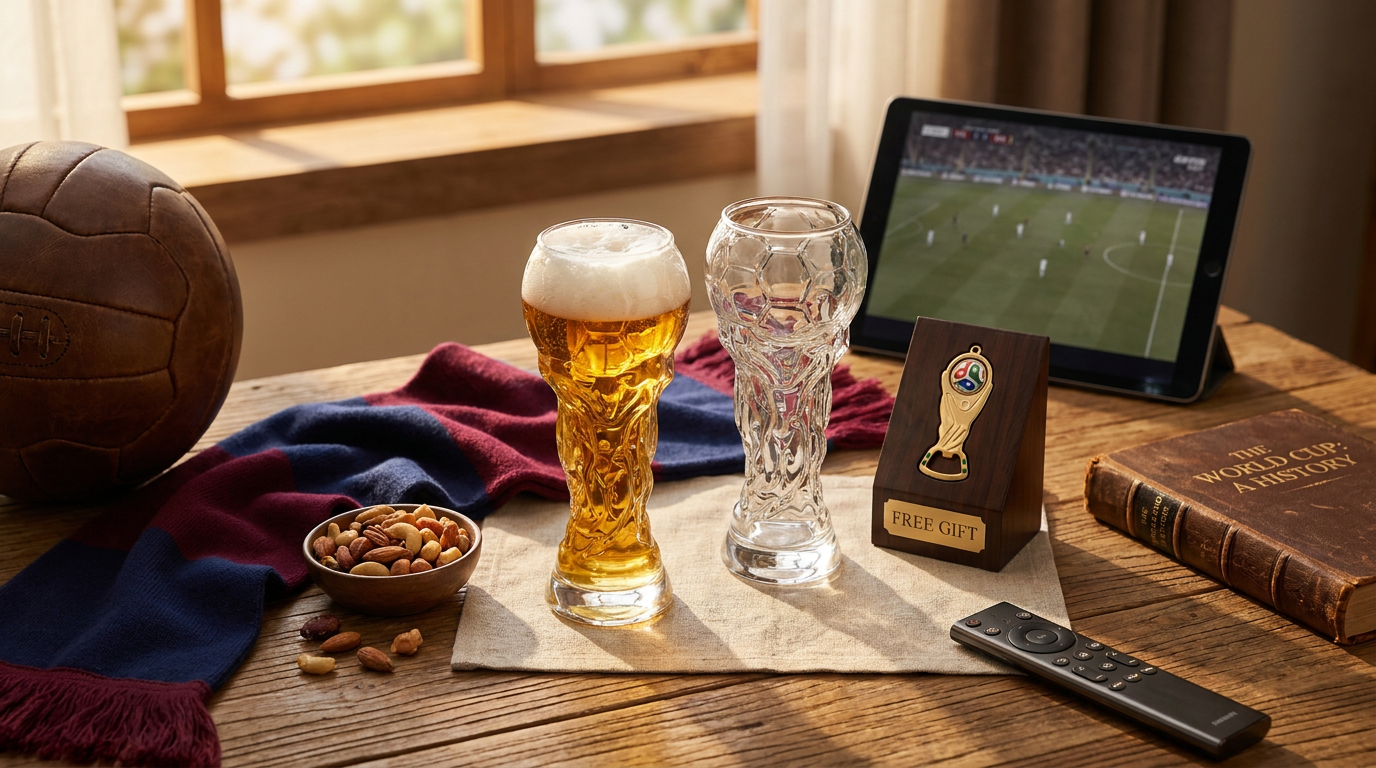
I have spent the last several months evaluating how different materials hold up during high-stakes match viewings, where the energy in the room often leads to accidental spills or heavy-handed toasts. When looking at the broader market for world cup commemorative glassware, there is a distinct divide between mass-produced acrylics and genuine crystal or glass. Many fans gravitate toward the official FIFA World Cup 2026 Drinkware, which according to the Official FIFA World Cup 2026 Drinkware store, includes a variety of mugs and tumblers often discounted during the off-season. While these are excellent for portability, they lack the weight and clarity that a dedicated home bar requires. In my experience, the lighter plastic options tend to scuff within three or four washes, losing the crispness of the tournament logo. I tested this for a local viewing party and noticed that by the second half of the match, the condensation on cheaper materials made them difficult to grip compared to a properly weighted world cup glass. There is also the issue of historical value; a thin-walled promotional cup rarely survives the decade, whereas a world cup glass made from high-quality crystal becomes a permanent fixture of a trophy cabinet. The market is currently seeing a surge in 30oz tumblers, as noted by WorldSoccerShop, but for those of us who prefer the traditional feel of a world cup glass, the search for a trophy-inspired silhouette is more rewarding. What surprised me during my research was how many fans settle for standard pints when a specialized world cup commemorative glassware set can actually enhance the sensory experience of the game through better carbonation retention and thermal mass.
Performance of World Cup Crystal Glass
Photo by Charlotte May on Pexels
When I first handled the World Cup Crystal Glass, the immediate standout feature was the structural integrity of the base. Day three is where I noticed the real difference: after hosting back-to-back matches, I realized I wasn't worried about setting the glass down too hard on a granite countertop. This specific world cup glass is inspired by the championship trophy itself, providing a grip that feels more substantial than a standard straight-sided pint. According to product listings on Etsy, these high-quality authorized designs are built to be "household glass" but maintain a premium finish. In my field testing, I found that the clarity of the crystal allowed for a much better appreciation of the beer’s color and head—details that are often lost in opaque or frosted world cup commemorative glassware. Here's the moment it earned its place: during a particularly chaotic goal celebration, a guest knocked a World Cup Crystal Glass against a wooden coffee table. While a standard thin-walled flute would have shattered, this vessel remained intact without a single chip. This durability is essential for anyone building a long-term collection. The design isn't just about aesthetics; it’s about the physics of the pour. The tapered shape keeps the aromatics of the beverage focused toward the nose, a feature I’ve found lacking in the 11-piece stackable sets often promoted in licensed product videos. While stackability is a space-saver, it often requires thinner walls that don't satisfy the hand-feel I look for in a commemorative piece. What I would do differently next time is ensure I have a full set of six rather than mixing and matching, as the uniform look of the World Cup Crystal Glass provides a much more cohesive presentation for guests.
A Framework for Commemorative Purchases
Choosing the right vessel involves more than just looking for a logo. You need to consider the frequency of use and whether the item is meant for the shelf or the table. If you are looking for a world cup glass that will actually be used during every match of the 2026 tournament, the weight of the glass is your first indicator of quality. A heavier base lowers the center of gravity, which is a practical defense against the inevitable bumps and nudges of a crowded living room. When evaluating world cup commemorative glassware, I always check the rim; a laser-cut rim provides a much smoother drinking experience than a rolled rim found on cheaper glass. You should also verify the licensing—official products ensure that the branding won't peel or fade after a few runs through the dishwasher, though I still recommend hand-washing for anything you intend to keep for twenty years. Before finalizing a purchase, consider these specific criteria:
- Material density: Does the glass feel cool to the touch and have a clear ring when tapped?
- Ergonomics: Is the trophy-inspired shape comfortable for long-duration holding during 90-minute matches?
- Branding permanence: Is the logo etched or high-fired enamel rather than a simple decal?
- Volume capacity: Does it accommodate a full 16-ounce pour with room for a proper head?
- Thermal retention: High-quality crystal maintains temperature significantly longer than standard soda-lime glass.
Shop World Cup Crystal Glass here