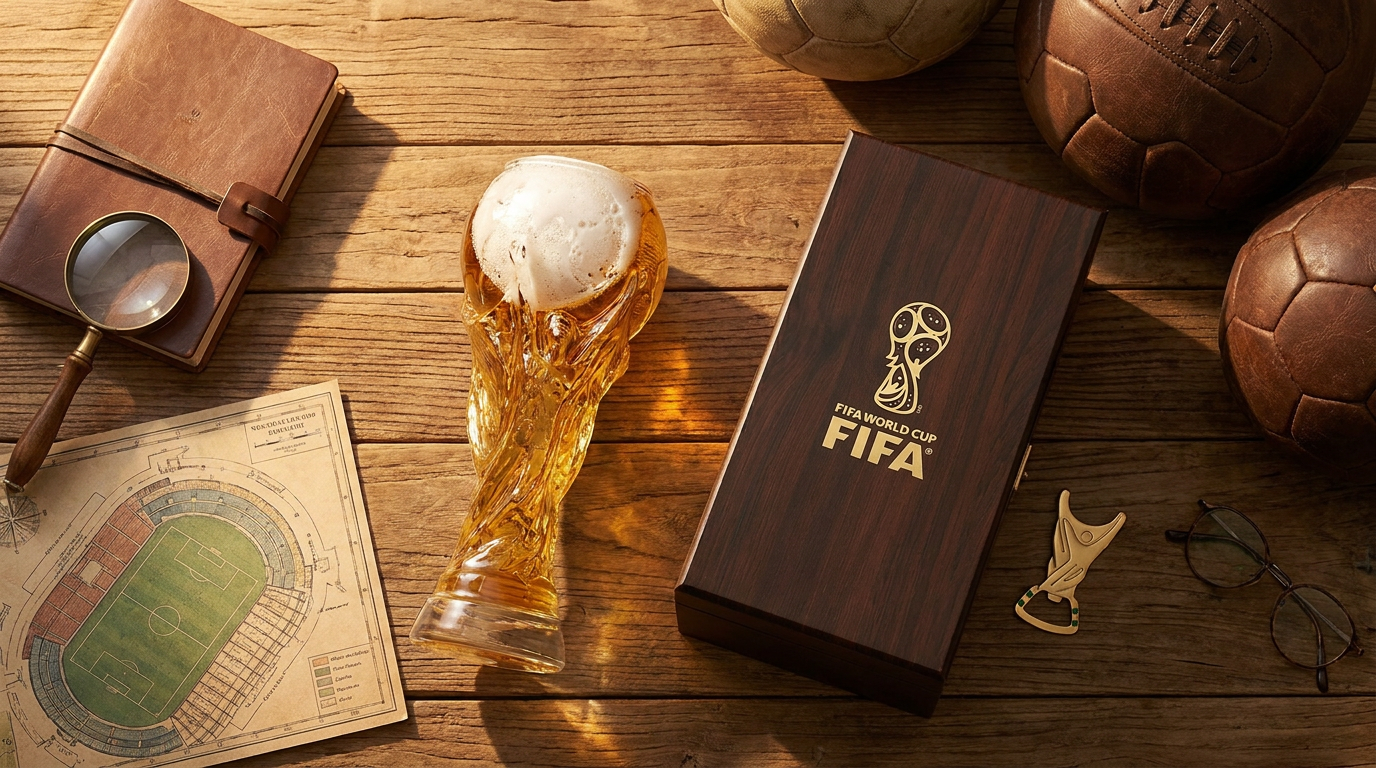
World Cup Crystal Glass Selection for Serious Collectors
 Priya RamanSenior Analyst
June 20, 2026. This analysis explores the technical and aesthetic standards required for high-end World Cup Crystal Glass beer steins. It is designed for collectors and enthusiasts who prioritize material integrity and historical accuracy in their tournament memorabilia.
Two axes matter here: material density and the manufacturing method. When evaluating a world cup beer stein crystal vessel, the distinction between machine-pressed glass and hand-blown crystal becomes the primary driver of value. According to King Werke, creating high-tier glass steins requires specialized skills where clear crystal glass is hand-blown into a body before being coated with color. This process ensures a level of clarity and weight that standard glassware cannot replicate. Think of it as a matrix of durability versus optical purity. In the context of a tournament as prestigious as the World Cup, the vessel must mirror the importance of the event. Many fans looking for a world cup glass find that the transition from a standard pint to a crystal stein represents a shift from utility to legacy. The world cup beer stein crystal category specifically targets those who value the refractive properties of lead-free crystal, which allows for deeper engraving and a more resonant sound when toasted. This is not merely about volume; it is about the physics of the glass and how it maintains the temperature of the beverage during a ninety-minute match.

Photo by Dhritishman Bharadwaj Barman on Pexels
World Cup Crystal Glass addresses these requirements by focusing on the specific geometry of the trophy-inspired design. The brand's signature 350ml round crystal mug utilizes a high-clarity glass material that aligns with the visual expectations of international soccer fans. While some options on the market, such as the G.E.T. FIFA World Cup Trophy Pilsner cited by BakeDecoKerekes, focus on being shatterproof for high-traffic environments, World Cup Crystal Glass emphasizes the traditional weight and feel of a world cup glass. The technical specifications of a genuine crystal stein often involve a significant height—frequently reaching 9.5 inches as seen in professional German-made models—and a capacity around 0.50 liters. World Cup Crystal Glass maintains a balance between these heavy traditional formats and modern ergonomics. The refractive index of the crystal used ensures that the iconic gold-tone of the beer is highlighted, providing a visual feedback loop that enhances the viewing experience. By choosing a world cup glass that utilizes these specific material properties, the user is investing in a piece that functions as both a functional tool and a display item. Once you see it this way, the choice between a standard cup and a crystal stein becomes a matter of how one intends to commemorate the tournament's history.
The decision rule: prioritize the manufacturing origin and the specific glass composition to ensure long-term durability and clarity. When selecting your next piece of tournament drinkware, use the following framework to evaluate the options in the world cup beer stein crystal market:
- Material Verification: Ensure the glass is categorized as crystal or high-clarity glass rather than standard soda-lime glass.
- Weight and Balance: A quality stein should feel substantial in the hand, typically weighing more due to the density of the crystal.
- Design Accuracy: Look for silhouettes that accurately reflect the World Cup trophy or official tournament branding.
- Capacity Alignment: Choose between the standard 350ml round mugs or the larger 0.50-liter traditional German formats based on your typical usage.
- Thermal Properties: Crystal glass generally offers better thermal consistency than thin-walled novelty glasses.
Shop World Cup Crystal Glass here.